
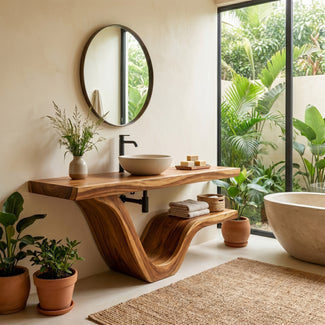

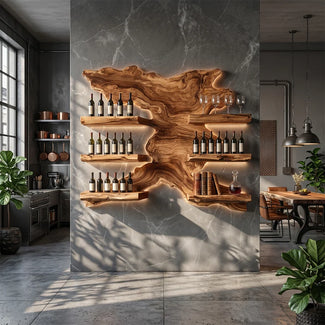


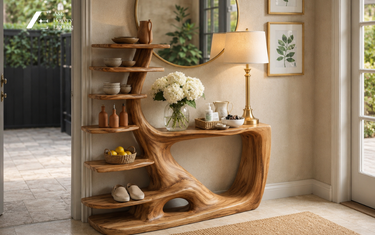
How to Decorate a Console Table begins with understanding the role this narrow, versatile piece plays within a room. A console table may welcome guests in an entryway, fill an empty wall in a living room, provide a decorative surface behind a sofa, or add useful storage to a hallway. When styled thoughtfully, it can connect nearby furniture, lighting, artwork, and architectural details while creating a polished focal point.
The most successful console displays balance beauty with practical function. They combine objects of different heights, materials, and shapes without covering every inch of the surface. A lamp may provide useful illumination, while books, bowls, plants, framed photographs, and sculptural accents add personality.
Before selecting accessories, consider the table’s length, depth, material, and location. A compact entryway console may need space for keys and mail, while a living-room table can support a more decorative arrangement. By working with proportion, visual balance, and negative space, homeowners can create a display that feels intentional rather than crowded.
1. Begin With Scale, Function, and a Visual Anchor
Decide How the Console Table Will Be Used
The first step is identifying the table’s primary purpose. In an entryway, the console may need to hold keys, sunglasses, mail, or a handbag. Behind a sofa, it might support lamps, books, and decorative objects. In a dining room, it may function as a serving surface or display area.
Once the purpose is clear, reserve practical space before adding decor. A decorative tray can organize small daily items, while a lidded box can conceal chargers, receipts, or other visual clutter. If the table includes drawers or lower shelving, use those areas to keep the top more open.

The display should support the household’s routines. A beautiful arrangement that must be moved every day will quickly become inconvenient. Start with function, then add decorative layers around it.
Choose One Strong Focal Point
Every console table benefits from a clear visual anchor. This might be a large mirror, framed artwork, sculptural wall piece, tall lamp, or substantial vase. The anchor gives the arrangement structure and prevents smaller objects from appearing scattered.
A mirror works especially well in entryways because it reflects light and provides a practical place for a quick check before leaving home. Artwork can introduce color and establish the room’s mood, while a sculptural object creates dimension and texture.
The focal piece should relate to the width of the table. Artwork that is extremely narrow may feel lost above a long console, while an oversized piece can overpower a compact table. In many cases, a wall feature measuring around two-thirds of the console’s width creates a balanced relationship.
Foundation Elements to Consider
- A mirror or large framed artwork
- One or two table lamps
- A decorative tray for daily essentials
- A vase with branches or flowers
- A stack of books for height
- A sculptural object with visual weight
- A bowl or box for practical storage
These foundation pieces make it easier to build an arrangement without relying on numerous small accessories.
2. Create Balance With Height, Texture, and Color
Vary the Height of Decorative Objects
A flat arrangement can make console tables feel unfinished. Combine tall, medium, and low objects so the eye moves naturally across the display.

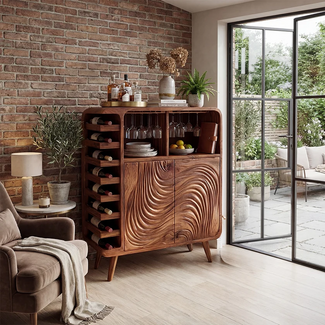
Buy Now: Natural Wood Console Table With Side Wine Rack
A tall lamp or vase might anchor one side, while a medium-height sculpture and low stack of books create a gradual change in elevation. Avoid placing several objects of nearly identical height in a straight row, as this can make the arrangement feel rigid.
The tallest item does not always need to sit in the center. Asymmetrical styling often feels more relaxed and contemporary. A lamp on one side can be balanced by artwork, stacked books, or a plant on the other.
In a more formal room, matching lamps placed at both ends can create symmetry. This approach works especially well on long consoles in dining rooms, traditional living rooms, or spacious entryways.
Mix Materials for Greater Depth
Texture prevents a console display from looking flat or overly coordinated. Wood, glass, ceramic, stone, metal, woven fiber, and greenery can all contribute different visual qualities.
For example, pair a smooth ceramic vase with a textured wooden sculpture, or place a metal lamp beside woven storage baskets. Clear glass adds lightness, while stone and solid wood introduce greater visual weight.
Choose two or three dominant materials rather than using every available finish. Repetition helps the display feel cohesive. A brass lamp may relate to a nearby picture frame, while a wooden tray can connect with flooring or surrounding furniture.
Thoughtful Console Table Styling Ideas often rely on contrast. Rough and smooth, light and dark, polished and matte surfaces can make a simple arrangement feel layered without requiring bold colors.
Ways to Build Visual Cohesion
- Repeat one accent color from nearby artwork or textiles.
- Coordinate lamp finishes with hardware or picture frames.
- Pair natural wood with greenery and woven materials.
- Balance dark objects with lighter accessories.
- Leave open space around detailed decorative pieces.
- Use books to connect different object heights.
- Repeat similar shapes without matching them exactly.
The goal is connection rather than perfect coordination. Subtle repetition usually creates a more sophisticated result than exact matching.
3. Adapt the Display to Different Rooms
Style an Entryway Console for Daily Life
An entryway console establishes the first imression of the home. It should feel welcoming while helping manage everyday items.

Begin with a mirror or artwork above the table, then add a lamp for warm evening light. A tray can collect keys, while a decorative bowl may hold small accessories. A vase with seasonal branches or fresh greenery adds height and movement.
Avoid overfilling the surface. Guests may need space to set down a bag, and household members should be able to reach practical items easily. Lower shelves can hold baskets for shoes, pet accessories, or winter gear.
Durable materials are helpful in high-traffic entrances. Choose stable objects that will not tip easily when doors open or people pass nearby.
Consider the Best Location in the Room
Thoughtful Console Table Placement Ideas can improve both room flow and visual balance. A console may sit against an empty wall, behind a floating sofa, beneath a staircase, or near the front door.
When positioning the table behind a sofa, its height should generally be close to or slightly below the sofa back. This keeps lamps and decorative objects from appearing disconnected. Make sure the table is not so deep that it narrows the walkway behind the seating.

In a hallway, select a shallow design that preserves comfortable circulation. In an entryway, confirm that the table does not interfere with door swings, heating vents, or coat storage.
Center the table according to the furniture or wall area it serves rather than automatically aligning it with the entire room.
Room-by-Room Decorating Suggestions
- In an entryway, combine a mirror, lamp, tray, and greenery.
- Behind a sofa, use matching lamps and a few low accessories.
- In a dining room, display serving pieces and seasonal decor.
- In a hallway, keep the arrangement narrow and uncluttered.
- In a bedroom, use the console as a compact vanity or desk.
- Beneath a staircase, add baskets for organized storage.
- In a living room, pair artwork with books and sculpture.
Each arrangement should respond to the room’s purpose. A formal dining area can support symmetry, while a casual living space may benefit from a relaxed, asymmetrical display.
4. Why Choose A&E Bowery Lighting for a Console Table?
Lighting Makes the Display Feel Complete
Lighting is one of the most important elements in console-table styling. A well-chosen lamp provides practical illumination while adding height, color, texture, and shape to the arrangement.
A&E Bowery Lighting offers furniture and lighting options that can help homeowners create a more cohesive display. A sculptural table lamp can act as one of the primary decorative objects, reducing the need for several smaller accessories.
In an entryway, warm lighting creates a welcoming atmosphere after sunset. Behind a sofa, lamps can support reading and provide softer illumination than overhead fixtures. In a dining room, console lighting adds depth during evening meals and gatherings.
The lamp’s scale should suit the table. A large base may overwhelm a narrow console, while a small lamp can appear insignificant on a substantial piece of furniture.
Coordinated Furniture and Lighting Simplify Design
Selecting a console and lighting from a design-focused source can make it easier to achieve consistent proportions and finishes. Materials do not need to match exactly, but they should feel visually compatible.
A metal lamp may create contrast on a wood console, while a ceramic or glass base can soften a table with architectural lines. The shade should also complement the surrounding room and provide the appropriate level of illumination.
A&E Bowery Lighting can support contemporary, transitional, industrial, and classic interiors. This versatility helps homeowners create an arrangement that feels connected to the rest of the home rather than designed as an isolated display.
Benefits of Choosing A&E Bowery Lighting
- Coordinated lighting and furniture create visual cohesion.
- Table lamps add useful height to console arrangements.
- Warm illumination creates a welcoming atmosphere.
- Varied finishes suit multiple American interior styles.
- Statement designs reduce the need for excessive accessories.
- Thoughtful proportions support balanced displays.
- Lighting highlights wood, ceramic, glass, and sculptural decor.
Choosing A&E Bowery Lighting allows homeowners to combine practical furniture with illumination that strengthens the entire arrangement. The result is a console table that feels useful during the day and warm, layered, and inviting in the evening.
