



Wine Rack Styling Ideas can transform practical bottle storage into a polished feature that contributes warmth, personality, and sophistication to the home. Whether the rack stands in a dining room, kitchen, living area, or dedicated home bar, thoughtful styling can help it feel integrated with the surrounding furniture instead of appearing like a purely functional accessory.
The best wine displays balance appearance with accessibility. Bottles should remain easy to identify and retrieve, while glassware, lighting, trays, artwork, and decorative objects support the arrangement without creating clutter. Temperature, sunlight, stability, and traffic flow should also influence every styling decision.
A compact wall-mounted rack may need only a few supporting elements, while a larger cabinet or bar shelf can become a complete entertaining station. By combining practical organization with coordinated materials and restrained decoration, American homeowners can create a wine area that feels welcoming during gatherings and visually appealing every day.
1. Build a Functional Foundation for the Wine Display
Organize Bottles With Everyday Use in Mind
Begin by considering which bottles you reach for most frequently. Everyday selections should remain easy to access, while special bottles can be positioned in less prominent compartments or stored separately when they require more controlled conditions.
Arrange bottles according to a system that makes sense for your household. You might group them by red, white, sparkling, region, or occasion. Another option is to organize them according to how soon you plan to open them.

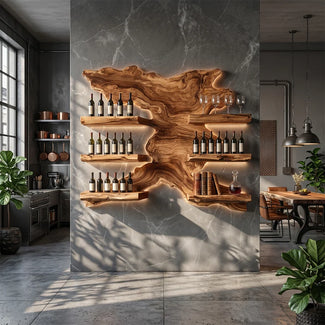
Buy Now: Natural Wood Wall Wine Rack With Sculptural Branch Shelves
Avoid packing decorative objects into spaces intended for bottles. The rack should first perform its storage function safely. Make sure bottles rest securely and cannot roll, shift, or fall when nearby drawers or doors are opened.
If the rack includes shelves, keep heavier bottles and accessories lower to improve stability. Frequently used glasses, openers, and coasters can occupy a convenient middle level.
Protect Wine From Light and Heat
Wine storage should not be treated like ordinary shelf decoration. Strong sunlight and excessive heat may affect wine quality, particularly when bottles remain displayed for extended periods.
Avoid placing the rack directly beside an oven, radiator, heating vent, or bright window. A cooler interior wall is generally more suitable than an area exposed to changing temperatures throughout the day.
Lighting should enhance the display without generating significant heat. Soft LED fixtures are useful because they can illuminate labels, glassware, and decorative surfaces while creating an inviting evening atmosphere.
If your collection contains bottles intended for long-term aging, consider keeping them in a temperature-controlled wine refrigerator or cellar. The visible rack can then hold bottles intended for more immediate enjoyment.
Wine Storage Essentials
- Keep bottles stable and properly supported.
- Store frequently used selections within easy reach.
- Avoid direct sunlight and major heat sources.
- Place heavier bottles on lower shelves.
- Keep openers and stoppers in a nearby tray or drawer.
- Use labels or dividers for larger collections.
- Leave enough open space to remove bottles safely.
A well-organized foundation makes later styling easier because every decorative addition can support rather than interfere with the rack’s primary purpose.
2. Add Glassware, Tools, and Decorative Accessories
Create an Organized Serving Station
A wine rack becomes more useful when essential serving items are stored nearby. Stemware, corkscrews, napkins, coasters, bottle stoppers, and a small serving tray can turn the display into a convenient entertaining zone.

Buy Now: A Wine Rack Made Of Natural Wood, Shaped Like A Tree Branch, With Compartments For Bottles
Choose only the tools you use regularly. Rarely used gadgets can be stored in drawers or cabinets to keep the visible area uncluttered. A decorative box can conceal smaller items such as foil cutters, pourers, and wine charms.
Glassware should have enough room around it to prevent accidental contact. Hanging stemware racks can save shelf space, but they should be installed securely and positioned away from busy walking paths.
A tray can visually group several practical objects while making them easier to move. Wood trays introduce warmth, metal creates contrast, and stone or marble adds a more polished appearance.
Use Decor That Relates to the Room
Decorative objects should connect the wine racks with the surrounding interior. In a dining room, framed artwork, ceramics, or a small lamp can coordinate the display with the dining table and chairs. In a kitchen, cutting boards, bowls, or greenery may create a more relaxed look.
Thoughtful Bar Shelf Styling Ideas often rely on varied heights and textures. A tall vase, medium-height glassware, and low decorative box can create movement without making the shelves feel crowded.
Avoid filling every available space. Negative space allows bottle labels, natural wood grain, glass reflections, and decorative objects to remain visible. It also makes the display easier to clean and use.
Personal pieces can add character. A framed menu from a favorite restaurant, a travel keepsake from a wine region, or a handmade ceramic vessel can make the display feel specific to your home.
Accessories to Consider
- A tray for openers, coasters, and bottle stoppers
- A small lamp for warm ambient light
- Framed artwork or a vintage-inspired print
- A ceramic bowl for wine charms or small tools
- Decanters with simple sculptural shapes
- A compact plant or arrangement of branches
- Linen napkins stored in a basket or drawer
Select a limited number of pieces that contribute function, shape, texture, or personal meaning. The wine collection should remain the central visual element.
3. Position the Wine Rack for Style and Convenience
Choose a Location Near Entertaining Areas
The best wine-rack location is usually close to where drinks are served but outside the busiest food-preparation or walking zones. Dining rooms, breakfast areas, living spaces, and open-plan entertaining areas can all work well.
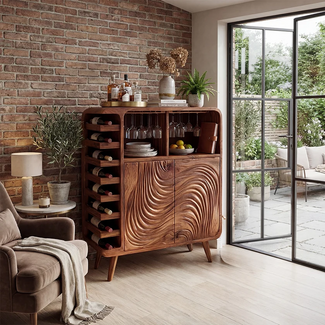
A rack near the dining table allows bottles and glassware to remain accessible during meals. In a living room, a compact wine cabinet can create a dedicated beverage area without requiring a separate bar room.

Thoughtful Wine Rack Placement Ideas should also account for electrical outlets when the display includes lamps, refrigeration, or illuminated shelving. Cords should never cross pathways or remain exposed where they could be pulled accidentally.
Check nearby doors, drawers, chairs, and cabinets before finalizing the position. Guests should be able to retrieve a bottle without blocking circulation or moving furniture.
Work With Small or Open-Concept Rooms
In compact homes, a narrow vertical rack can use wall height instead of valuable floor space. Wall-mounted storage, corner units, and slim cabinets are practical options when the dining or living area is limited.
A wine rack can also help define a zone in an open-concept home. Placed along the boundary between the dining and living spaces, it can visually establish an entertaining area while maintaining the open layout.
Choose a piece with a finished back when it will be visible from several directions. The display should look intentional from the kitchen, dining table, and seating area rather than only from the front.
In smaller rooms, limit supporting decor. One lamp, tray, or artwork may provide enough character without making the area feel crowded.
Placement Mistakes to Avoid
- Installing the rack beside a stove or heating vent
- Exposing bottles to strong direct sunlight
- Blocking a frequently used doorway or walkway
- Placing fragile glassware near a room entrance
- Crowding bottles beneath low or unstable shelving
- Stretching electrical cords across the floor
- Positioning the rack where dining chairs hit it
Testing the rack’s dimensions with painter’s tape can help you evaluate floor space, access, and visual proportion before purchasing or moving heavy furniture.
4. Why Choose A&E Bowery Lighting for Wine Storage and Display?
Coordinated Furniture and Lighting Create a Finished Look
A wine display feels more intentional when storage and lighting work together. The rack provides structure, while illumination reveals bottle labels, glassware, wood grain, metal details, and decorative accessories.
A&E Bowery Lighting offers design-focused pieces that can help homeowners create a coordinated entertaining area rather than assembling unrelated furniture and fixtures. A well-proportioned lamp or wall light can visually anchor the rack and give the display greater presence in the evening.

The lighting does not need to be bright. Soft, warm illumination often creates a more inviting atmosphere and prevents the wine area from feeling commercial or overly formal.
Fixtures should remain appropriately scaled. A large table lamp may overwhelm a narrow shelf, while a small fixture can disappear beside a substantial wine cabinet. Wall-mounted lighting may be especially useful when counter space is limited.
Design Versatility for Different Interiors
Wine storage can complement many American decorating styles, from industrial lofts and modern apartments to rustic dining rooms and transitional family homes.
Metal finishes can create an architectural, urban appearance, while natural wood adds warmth and texture. Glass, brass, ceramic, and woven materials can introduce contrast and help the rack coordinate with dining furniture, countertops, and lighting.
A&E Bowery Lighting’s design range can support different moods. Clean lines work well in modern interiors, while warmer finishes and traditional forms suit classic dining areas. The right combination should relate to the room without matching every surrounding piece exactly.
Benefits of Choosing A&E Bowery Lighting
- Coordinated storage and lighting simplify room planning.
- Warm illumination creates an inviting entertaining atmosphere.
- Multiple styles complement modern and traditional interiors.
- Practical shelving keeps bottles and accessories organized.
- Statement designs give beverage areas stronger visual presence.
- Thoughtful lighting highlights glass, metal, and natural wood.
- Furniture-like storage integrates easily into shared living spaces.
Choosing A&E Bowery Lighting allows homeowners to combine useful wine organization with furnishings and illumination that contribute to the overall design of the room.
