



How to Style a Bathroom Vanity begins with balancing everyday function and visual simplicity. Because the vanity is often the most frequently used surface in a bathroom, it must support morning routines, nighttime skincare, grooming, and storage without becoming crowded or difficult to clean.
A thoughtfully styled vanity can make even a small bathroom feel calmer and more complete. The right arrangement brings together the mirror, lighting, countertop, sink, hardware, and decorative accessories while leaving enough open space for practical use. Rather than displaying every product you own, successful styling focuses on a carefully edited selection of essentials.
The size of the vanity, number of sinks, available storage, and room layout should guide each decision. A compact powder-room vanity may need only soap and a small decorative object, while a double vanity in a primary bathroom can support organized zones for two people. By combining useful storage, coordinated materials, and warm lighting, homeowners can create a bathroom that feels polished, comfortable, and easy to maintain.
1. Begin With Function, Organization, and Clear Surfaces
Decide What Needs to Stay on the Counter
Start by identifying the items used every day. Hand soap, toothbrushes, skincare products, and grooming tools may need to remain accessible, while backup supplies and less frequently used products can be stored in drawers or cabinets.

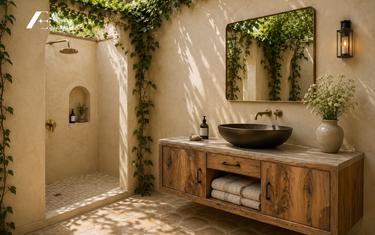
Buy Now: Floating Solid Wood Bathroom Vanity with Drawer and Cabinet Storage
Limit the countertop to essentials that are both useful and visually appropriate. Too many bottles can create clutter, make cleaning more difficult, and distract from the vanity’s material and design.
Group related products together rather than scattering them across the surface. A small tray can hold skincare items, while a cup or ceramic container can organize toothbrushes and grooming tools. This approach makes the vanity easier to use and gives the arrangement a more intentional appearance.
Use Trays, Jars, and Containers
Decorative containers can turn ordinary bathroom necessities into part of the design. Glass jars work well for cotton swabs, cotton rounds, or bath salts, while ceramic vessels can hold toothbrushes, makeup brushes, or combs.
A tray creates a clear boundary for smaller objects. Choose one that suits the vanity’s proportions and materials. Wood introduces warmth, marble adds a polished look, and metal can coordinate with faucets or cabinet hardware.
Avoid placing every product into a matching container simply for appearance. The system should make daily routines easier, not create extra work. Refillable soap dispensers and a few well-chosen storage pieces are usually enough.
Everyday Organization Essentials
- Keep only frequently used items on the countertop.
- Store backups and bulk products inside cabinets.
- Use one tray to group skincare or grooming products.
- Place cotton items in covered containers.
- Choose washable organizers for makeup and brushes.
- Keep electrical tools away from wet sink areas.
- Leave open space for cleaning and daily routines.
These practical Bathroom Vanity Styling Ideas make the countertop feel calmer while ensuring necessary products remain easy to reach.
2. Create Balance With Mirrors, Lighting, and Proportion
Choose a Mirror That Fits the Vanity

The mirror should feel proportionate to the vanity below it. A mirror that is too narrow may appear disconnected, while an oversized design can overpower a small cabinet or extend awkwardly beyond the sink area.
For a single vanity, one large mirror centered above the sink often creates the cleanest appearance. A double vanity may use one wide mirror or two separate mirrors aligned with each sink. Two mirrors can give each user a defined area, while one continuous mirror may make the room feel larger.
Shape also affects the mood. Rectangular mirrors provide structure, round mirrors soften straight cabinetry, and arched designs can introduce architectural character. The mirror frame may coordinate with the faucet and hardware, but exact matching is not required.
Layer Lighting for Grooming and Atmosphere
Bathroom lighting should support practical tasks without creating harsh shadows. A ceiling fixture can provide general illumination, but it is rarely enough for grooming on its own.
Wall sconces placed on both sides of the mirror provide balanced facial lighting. When side placement is not possible, a horizontal fixture above the mirror can offer useful illumination. Warm or neutral-white light often feels more flattering and comfortable than extremely cool lighting.

Dimmers are especially valuable in bathrooms. Bright light supports shaving, makeup, and cleaning, while softer illumination creates a more relaxing atmosphere during evening routines.
Lighting fixtures also contribute decorative shape and finish. Glass, metal, ceramic, and fabric-like shades can add texture while connecting the vanity area to the rest of the bathroom.
Proportion and Lighting Checks
- Center the mirror according to the sink or vanity.
- Keep sconces at approximately face level when possible.
- Choose fixtures that do not overwhelm the mirror.
- Use layered light instead of one harsh ceiling source.
- Select bulbs with accurate, comfortable color rendering.
- Add dimmers for flexible morning and evening use.
- Coordinate fixture finishes with nearby hardware.
The mirror, lights, and vanity should read as one composition. Their proportions matter as much as the individual style of each element.
3. Add Warmth Through Color, Texture, and Placement
Introduce Natural and Decorative Details
Bathrooms contain many hard surfaces, including tile, porcelain, glass, stone, and metal. Small natural elements can soften these materials and make the vanity feel warmer.
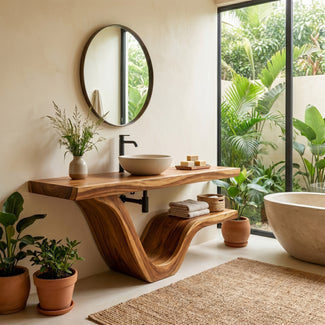
A compact plant, fresh flowers, wooden tray, woven basket, or ceramic vase can introduce texture without taking over the countertop. Choose items that tolerate bathroom conditions and are easy to clean.

Buy Now: Sculptural Live Edge Wood Floating Vanity with Hollow Form
In a small powder room, one decorative object may be enough. A sculptural soap dispenser, simple vase, or framed artwork can create personality while preserving valuable space.
Textiles also contribute softness. Hand towels can repeat colors from the rug, shower curtain, or wall paint, helping the vanity feel connected to the entire room.
Select a Calm, Cohesive Color Palette
A limited color palette helps the vanity feel organized. Begin with the permanent elements like the cabinet, countertop, tile, mirror frame, and hardware, then choose accessories that complement them.
Neutral colors such as white, cream, gray, taupe, and warm brown create a calm foundation. Muted green, blue, terracotta, or black can provide contrast without overwhelming the space.
Avoid matching every accessory exactly. A bathroom often feels more refined when it includes several related tones instead of one repeated color. For example, warm wood, beige ceramics, and brushed brass can work together without appearing overly coordinated.
Plan the Vanity’s Location Carefully
Thoughtful Bathroom Vanity Placement Ideas can improve both the appearance and function of the room. The vanity should allow cabinet doors and drawers to open fully without hitting the toilet, shower door, or nearby wall.
There should also be enough standing space in front of the sink for comfortable use. In shared bathrooms, consider whether two people can move through the room without blocking one another.
Natural light can be beneficial, but placing a mirror directly opposite a bright window may create glare. The vanity should also remain clear of door swings, floor vents, and major walking paths.
Placement and Styling Considerations
- Preserve enough room to stand comfortably at the sink.
- Confirm that drawers and cabinet doors open fully.
- Keep the vanity clear of bathroom door swings.
- Avoid blocking windows or heating vents.
- Place frequently used storage within easy reach.
- Use wall-mounted accessories in very compact bathrooms.
- Consider traffic flow in shared family spaces.
Good placement creates the foundation for effective styling. When the vanity is properly positioned, lighting, storage, and decorative elements can function more naturally.
4. Why Choose A&E Bowery Lighting for a Bathroom Vanity?
Coordinated Furniture and Lighting Create a Finished Look
A bathroom vanity does not exist separately from its lighting. The cabinet, mirror, wall fixtures, and surrounding finishes all contribute to the same focal area.
A&E Bowery Lighting offers design-focused options that can help homeowners coordinate furniture and illumination more effectively. Selecting pieces with compatible proportions, materials, and visual weight makes the bathroom feel planned rather than assembled from unrelated components.
A streamlined vanity may pair well with sculptural sconces, while a more traditional cabinet can be complemented by fixtures with classic detailing. The goal is not perfect matching, but a clear relationship between the elements.
Lighting Highlights Materials and Details
Well-positioned lighting reveals the vanity’s finish, countertop texture, hardware, and decorative accessories. Warm illumination can enrich natural wood tones, while clear task lighting makes stone, tile, and polished metal appear crisp and refined.
Fixtures can also balance the vanity visually. Side sconces frame the mirror and create symmetry, while one statement light above the mirror can provide a strong architectural feature in a compact room.
The scale of the fixture should reflect the vanity and mirror. Substantial double vanities can support larger or repeated lights, while a powder room often looks better with one compact, carefully selected fixture.
Benefits of Choosing A&E Bowery Lighting
- Coordinated furniture and fixtures simplify bathroom planning.
- Multiple styles support modern and traditional interiors.
- Layered illumination improves grooming and everyday function.
- Decorative fixtures add height and visual interest.
- Warm lighting enhances wood, stone, and metal finishes.
- Thoughtful proportions create a balanced vanity composition.
- Statement designs reduce the need for excessive accessories.
Choosing A&E Bowery Lighting allows homeowners to build the vanity area around both function and atmosphere. The right cabinet and lighting combination can make a bathroom feel brighter, more organized, and visually complete.
