



Bookshelf Styling Ideas can transform an ordinary storage unit into a thoughtful focal point that brings personality, warmth, and organization to a room. Although bookshelves are practical places for novels, reference materials, and family collections, they also offer valuable display space for artwork, plants, ceramics, photographs, and meaningful objects.
The most appealing shelves rarely look completely full or perfectly matched. Instead, they combine books and decorative pieces with enough open space to let individual items stand out. Changes in height, orientation, color, and texture create visual rhythm, while repeated materials help the entire arrangement feel connected.
Whether you are decorating a freestanding bookcase, built-in shelving, or a sculptural wooden unit, begin by considering how the shelves will be used. A home-office bookshelf may need practical access to documents, while a living-room display can focus more heavily on art and collected objects. With thoughtful editing, your bookshelf can remain useful while becoming one of the most expressive features in your home.
1. Build a Strong Foundation With Books
Mix Vertical Rows With Horizontal Stacks
Books should remain the foundation of most bookshelf arrangements, but they do not need to face the same direction. Combining vertical rows with horizontal stacks creates movement and prevents the display from feeling like tightly packed library storage.
Use upright groupings for books of similar height, supporting shorter sections with attractive bookends. Horizontal stacks work well in wider spaces and can serve as platforms for small decorative objects. A ceramic bowl, framed photograph, candle, or sculpture placed on two or three books introduces height without requiring additional shelf space.
Avoid filling every shelf from end to end. Small gaps between book groupings give the arrangement breathing room and make it easier to appreciate individual covers and objects.

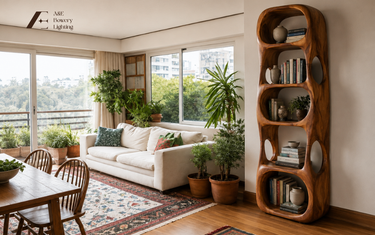
Buy Now: Rounded Wood Kitchen Bookshelf With Open Storage
Organize Books With Purpose
Books can be organized by subject, size, color, or frequency of use. In a home office, grouping titles by topic may be the most practical approach. In a living room, arranging selected books by color can create a more decorative appearance.
A balanced method combines organization with visual interest. Keep frequently used books within easy reach, then adjust the placement of less frequently used titles to distribute colors and heights across the shelves.
Large art, photography, and travel books often work best on lower shelves or in horizontal stacks. Smaller novels and collections can be placed closer to eye level. Rather than turning every book backward for a neutral look, preserve visible titles so the shelf remains personal and functional.
Book-Arrangement Essentials
- Mix upright books with short horizontal stacks.
- Keep heavy and oversized books on lower shelves.
- Use bookends to support small vertical groupings.
- Leave open space between selected collections.
- Place frequently read titles within comfortable reach.
- Avoid forcing books into shelves that are too short.
- Distribute colorful covers throughout the bookcase.
Books create structure, but they should not dominate every available surface. Leaving room for decorative pieces gives the arrangement greater depth and personality.
2. Add Art, Objects, and Natural Texture
Choose Decorative Pieces With Meaning

A bookshelf feels more authentic when it contains objects connected to your interests and experiences. Family photographs, travel souvenirs, handmade pottery, inherited items, and small works of art can tell a story that generic accessories cannot reproduce.
Choose fewer objects and give each one enough space. One distinctive carving or ceramic vessel often has more impact than several small decorations placed closely together. If you have a large collection, rotate selected pieces throughout the year rather than displaying everything at once.
Varying the shapes of the objects also creates interest. Pair a rectangular frame with a rounded bowl, an irregular sculpture, or a tall vase. This contrast prevents the shelves from looking repetitive.
Incorporate Plants and Organic Materials
Plants soften the straight lines of shelves and introduce natural movement. A trailing plant placed on an upper shelf can fall gently over the edge, while a compact plant can add life to a middle or lower section.
Select plants according to the available light. If the bookshelf stands in a darker area, realistic faux greenery may be more practical. Live plants should sit on protective saucers to prevent water from damaging wooden surfaces.
Other natural materials can provide a similar sense of warmth. Woven baskets, stone objects, wooden bowls, shells, and dried branches introduce texture while supporting an organic, relaxed atmosphere.
Decorative Elements to Consider
- Framed photographs or miniature artwork
- Handmade ceramic bowls and vases
- Wooden, stone, or metal sculptures
- Woven baskets for concealed storage
- Candles in stable decorative containers
- Small plants or trailing greenery
- Travel keepsakes and collected natural objects
These accessories can provide plenty of Bookshelf Placement Ideas when coordinated with the shelf’s location and scale. A living-room bookcase may support larger statement pieces, while a narrow hallway unit benefits from a simpler, lighter display.
3. Create Balance Through Color and Composition
Distribute Visual Weight Across the Shelves
Visual weight refers to how strongly an object attracts attention. Large pieces, dark colors, bold patterns, and substantial materials generally appear heavier than small or pale objects.

Avoid placing every dark or oversized item on one side of the bookcase. If a large vase sits on the upper left, balance it with a dark book grouping, framed artwork, or substantial bowl on the lower right.
Balance does not require perfect symmetry. Slight differences between the left and right sides can make the arrangement feel natural and collected. The goal is to prevent one area from looking noticeably crowded or empty.
Step back frequently while decorating. A shelf that looks balanced at close range may appear uneven when viewed from across the room.
Repeat Colors and Materials Subtly
Repetition helps connect separate shelves. A black picture frame may relate to a dark bookend elsewhere, while a ceramic vase can coordinate with a bowl several shelves away.
The repeated items do not need to be identical. Similar tones, finishes, or shapes are enough to create continuity. Natural wood, warm ceramics, brass accents, and neutral book covers can form a cohesive palette while still allowing variation.

When deciding How to Style a Bookshelf, choose two or three recurring materials and one or two accent colors. Repeating them throughout the arrangement will create unity without making every shelf look the same.
Balance and Editing Checklist
- Place substantial objects on lower or middle shelves.
- Spread darker colors throughout the full arrangement.
- Repeat selected materials in different sections.
- Avoid copying the same layout on every shelf.
- Leave negative space around detailed pieces.
- View the bookshelf from the room’s main entrance.
- Remove accessories when the display feels crowded.
Negative space is an intentional design element. Empty areas allow sculptural forms, natural grain, and meaningful objects to receive more attention.
4. Why Choose A&E Bowery Lighting for Bookshelves?
Furniture and Lighting Work Together
Bookshelves do not exist independently from the lighting and furniture around it. The right illumination can reveal book covers, natural wood grain, ceramics, artwork, and sculptural details that may otherwise disappear in shadow.
A&E Bowery Lighting offers design-focused pieces that can help homeowners coordinate shelving with nearby lamps and fixtures. A floor lamp beside a reading area can make books more accessible, while wall sconces or picture lights can highlight built-in shelves without taking up display space.
Warm, layered light also makes a bookshelf feel more inviting during the evening. Instead of relying entirely on a central ceiling fixture, combine ambient and accent lighting to create depth throughout the room.
Select Shelving That Supports the Interior
The bookshelf’s proportions, material, and construction should relate to the room where it is placed. A substantial wooden bookcase can anchor a large living room, while a lighter open design may suit a compact office or apartment.
Natural wood brings warmth to interiors containing painted walls, metal fixtures, glass, and upholstery. Visible grain creates texture even when the shelves are styled minimally, reducing the need for numerous decorative objects.
Coordinating the bookshelf with lighting also helps establish a clear visual zone. A reading chair, floor lamp, and well-styled shelf can turn an unused corner into a purposeful home library.
Benefits of Choosing A&E Bowery Lighting
- Coordinated furniture and lighting simplify room planning.
- Layered illumination makes books and artwork easier to see.
- Warm light enhances natural wood and textured objects.
- Multiple designs complement traditional and modern homes.
- Strong proportions create a clear visual focal point.
- Practical shelving supports both storage and decoration.
- Statement pieces reduce the need for excessive accessories.
Choosing A&E Bowery Lighting allows homeowners to approach shelving as part of a complete interior composition. Furniture, books, decorative objects, and illumination can work together instead of appearing like unrelated additions.
