


TV Cabinet Styling Ideas can transform a practical media unit into a polished focal point that supports entertainment, storage, and the overall character of a living room. Because the television is often one of the largest visual elements in the space, the cabinet beneath it plays an important role in balancing the dark screen and connecting it with the surrounding furniture.
A successful arrangement should look intentional without distracting from comfortable viewing. Decorative objects can soften the appearance of electronics, while drawers and enclosed cabinets keep controllers, cables, routers, and media accessories out of sight. The goal is not to cover every inch of the cabinet but to create a restrained display that remains functional.
The size of the television, the cabinet’s proportions, and the surrounding wall should guide every styling choice. By combining thoughtful storage, varied object heights, natural materials, and appropriate lighting, American homeowners can create a media area that feels organized, warm, and visually complete.
1. Build a Balanced Foundation Around the Television
Match the Cabinet to the Screen
The TV cabinet should generally be wider than the television. A narrow cabinet beneath a large screen can make the arrangement feel top-heavy, while an appropriately sized unit creates a stronger visual foundation.

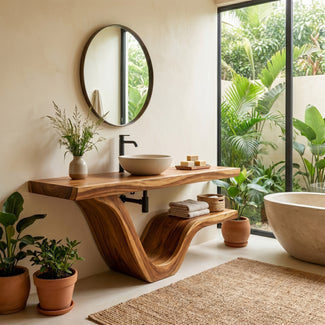
Buy Now: Natural Wood Media Wall Unit With Curved Tree Shelves
Ideally, leave visible cabinet surface on both sides of the screen. This extra width creates room for a few decorative objects and helps the television look integrated rather than suspended above unrelated furniture.
Height also matters. When the television sits directly on the cabinet, the center of the screen should remain close to seated eye level. If the TV is wall-mounted, avoid leaving an excessively large gap between the screen and the furniture. A moderate distance visually connects the two elements while preserving room for ventilation and practical access.
Before purchasing a cabinet, measure the television’s full width, including its stand or feet. Also confirm that the cabinet is deep enough to support the equipment safely.
Establish a Clear Visual Center
The television naturally becomes the visual center of the media wall, so decorative objects should support rather than compete with it. Keep the strongest accessories near the outer edges of the cabinet instead of placing tall objects directly in front of the screen.
A small plant, sculptural vase, or stack of books can balance one side. The opposite side may include a low bowl, candle, or decorative box. The two arrangements do not need to match perfectly, but they should have similar visual weight.
If the television is mounted off-center because of an unusual room layout, use accessories to create balance. A taller object on the more open side can help the entire composition feel intentional.
Foundation Styling Checklist
- Choose a cabinet wider than the television.
- Keep the screen close to comfortable seated eye level.
- Leave visible surface space on both sides of the TV.
- Avoid placing tall objects directly in front of the screen.
- Balance accessories by visual weight rather than exact symmetry.
- Center the cabinet according to the seating area.
- Test the arrangement from the main sofa and room entrance.
These foundational decisions make the media area easier to decorate and prevent the television from overwhelming the room.
2. Organize Electronics and Reduce Visual Clutter
Storage Features to Prioritize
- Closed drawers for remotes, cables, and game controllers
- Ventilated compartments for consoles and media players
- Adjustable shelves for differently sized equipment
- Rear openings for cable management
- Doors that do not interfere with remote signals
- Accessible storage for frequently used accessories
- Deep compartments for routers and power strips

A cabinet should support the household’s actual entertainment equipment. Measure every device before selecting furniture, including the space needed for ventilation and cable connections.
Conceal Cables and Power Strips
Visible cords can make even a beautifully styled cabinet feel unfinished. Route wires through openings at the back of the unit and group them with reusable cable ties or sleeves.
When the television is wall-mounted, consider an in-wall cable management system installed according to local electrical requirements. Surface-mounted cord covers can offer a less invasive alternative and may be painted to match the wall.
Power strips should remain accessible but concealed whenever possible. Avoid packing cables tightly into closed compartments because electronics need airflow. Labeling cords can also make future equipment changes easier.
Do not run extension cords across walkways or beneath rugs. Electrical safety should remain a priority even when the goal is a clean visual result.
Keep Everyday Accessories Organized
Remote controls, headphones, game controllers, charging cables, and streaming-device accessories can quickly clutter the surface. Give each item a designated storage location inside a drawer, basket, or decorative box.
A shallow tray can organize the few controls used daily. Less frequently used items should remain inside the cabinet. This system helps the media area stay polished without requiring constant rearrangement.
Store games, movies, and instruction manuals vertically when possible so they remain easy to identify. Small drawer dividers can prevent cables and accessories from becoming tangled.
Regular editing is helpful. Remove outdated devices, duplicate chargers, and unused media instead of allowing every compartment to become overcrowded.

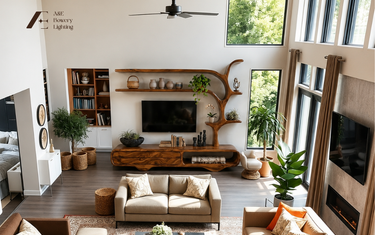
Buy Now: Natural Wood TV Console With Sweeping Loop End
3. Add Warmth Through Decor, Texture, and Lighting
Use Decorative Objects With Restraint
TV cabinets do not need a large collection of accessories. The television already occupies considerable visual space, so a limited number of carefully selected objects usually creates a more sophisticated result.
Choose pieces with different heights and shapes. A rounded ceramic vase can soften the straight edges of the screen, while a low book stack creates horizontal balance. A wooden sculpture or stone bowl can introduce natural texture.
Avoid using numerous small objects, which may appear scattered from across the room. Group two or three related items together and leave open space between the groupings.
Decor should also remain practical. Fragile objects may not be suitable in homes with children or pets, and candles should never be placed close to electronics or ventilation openings.
Connect the Cabinet to the Rest of the Room
Repeat one or two colors or materials already present in the living room. A black vase may relate to window frames or lighting, while a wooden bowl can echo the coffee table, shelving, or flooring.
The cabinet does not need to match every other piece of furniture. Complementary finishes often make the room feel more layered. For example, a warm wood media unit can work with lighter side tables and a darker dining table when the undertones feel compatible.

Plants are useful for softening the technological appearance of the media area. Choose compact greenery that will not block the screen or require frequent watering near electronics. A plant positioned beside the cabinet can also add height without covering valuable surface space.
Decor and Lighting Guidelines
- Use one or two accessory groupings instead of many small objects.
- Combine curved decor with the television’s straight lines.
- Repeat selected materials from nearby furniture.
- Add a compact plant for softness and natural color.
- Keep ventilation openings clear.
- Use warm, indirect lighting around the media area.
- Avoid placing bright lamps where they reflect on the screen.
Lighting should enhance the room without creating glare. A floor lamp beside the cabinet, wall sconces on the surrounding wall, or subtle backlighting behind the television can create depth during evening viewing.
4. Why Choose A&E Bowery Lighting for a TV Cabinet?
Coordinated Furniture and Lighting Simplify the Room
A media area feels more complete when the cabinet and surrounding lighting share compatible proportions, materials, and design character. A&E Bowery Lighting provides furniture and fixtures that can help homeowners build a visually connected arrangement rather than combining unrelated elements.
A streamlined cabinet may work well with modern metal sconces, while a warmer wood design can be complemented by glass, brass, or ceramic lighting. Exact matching is not necessary. The furniture and fixtures simply need to feel like parts of the same interior.
Selecting coordinated pieces can also simplify decisions about scale. A substantial media cabinet can support larger fixtures, while a compact unit often looks better with smaller lamps or understated wall lights.
Benefits of Choosing A&E Bowery Lighting
- Coordinated furniture and lighting create visual cohesion.
- Multiple designs suit modern and traditional interiors.
- Practical storage helps conceal electronics and accessories.
- Layered illumination improves the evening atmosphere.
- Warm lighting enhances wood, metal, and decorative textures.
- Statement designs reduce the need for excessive accessories.
- Thoughtful proportions create a balanced media wall.
These benefits allow the television area to serve both practical and decorative purposes without feeling overly complicated.
Create a Media Area That Works Day and Night
During the day, the TV cabinet should organize equipment and contribute to the room’s furniture layout. In the evening, lighting becomes more important because it affects comfort, screen glare, and atmosphere.
Soft ambient light reduces the harsh contrast between a bright screen and a completely dark room. A nearby floor lamp or dimmable wall fixture can provide gentle illumination without reflecting directly on the television.
A&E Bowery Lighting allows homeowners to approach the media wall as one complete design zone. Furniture provides storage and structure, while lighting reveals materials and makes the room feel more comfortable after sunset.
This combination can also help the cabinet remain visually interesting when the television is turned off. Natural finishes, carefully selected decor, and warm light give the area character beyond its entertainment function.
