


Sofa Placement Ideas can help homeowners create a living room that feels comfortable, visually balanced, and easy to navigate. Because the sofa is usually the largest piece of furniture in the room, its position influences nearly every other design decision, including where to place chairs, tables, lighting, rugs, and entertainment equipment.
The best arrangement should support the room’s primary purpose. A family living room may need clear television sightlines and durable open pathways, while a formal sitting room may prioritize conversation and symmetry. In an open-concept home, the sofa can also define the living area without relying on walls.
Before moving furniture, measure the room and note the locations of doors, windows, vents, outlets, and architectural features. Consider how people enter the space, where they naturally walk, and which view deserves attention. A well-positioned sofa should anchor the room without blocking circulation or making the layout feel crowded.
1. Position the Sofa Around the Room’s Main Function
Create a Comfortable Conversation Area
In a conversation-focused room, position the sofa so it faces or angles toward other seating. Chairs should sit close enough for people to speak comfortably without raising their voices, but the arrangement should still provide sufficient personal space.\

A coffee table can help connect the seating group. Leave approximately 14 to 18 inches between the sofa and table so guests can reach drinks while still moving around comfortably. Side tables should be accessible from the outer sofa seats.
Avoid pushing every piece of furniture against the walls when the room is large enough to support a more intimate grouping. Moving the sofa slightly toward the center can make conversation feel more natural and prevent the room from appearing empty in the middle.
Arrange the Sofa for Television Viewing
When television is the room’s main function, align the sofa with the screen rather than automatically centering it on the longest wall. Viewers should be able to see the television without turning their heads or sitting at an uncomfortable angle.
The ideal viewing distance depends on screen size, but the sofa should not sit so close that the television dominates the entire field of vision. It should also remain far enough from the screen to preserve open movement around the coffee table and media cabinet.
Check for glare from windows and lighting fixtures before finalizing the arrangement. A sofa that faces a television opposite a bright window may create an uncomfortable viewing experience during the day. Adjustable shades or a different wall orientation may solve the problem.

Buy Now: Sculptural Wave Sofa With Open Arm Flowing Frame
Function-First Placement Checklist
- Identify the room’s primary daily activity.
- Face the sofa toward the main focal point.
- Keep tables within comfortable reach.
- Preserve clear views of the television or fireplace.
- Leave enough space for chairs and ottomans.
- Avoid creating a pathway through the seating group.
- Test the arrangement from every seat.
Starting with function reduces unnecessary furniture movement and makes it easier to build the rest of the room around the sofa.
2. Adapt the Sofa to Different Room Layouts
Placement Options for Common Living Rooms
- Center the sofa opposite a fireplace or media wall.
- Float it in the room to define an open-concept seating zone.
- Place it beneath a window when the back is low enough.
- Position it along the longest uninterrupted wall.
- Use it to divide the living room from the dining area.
- Angle it slightly in an irregularly shaped space.
- Place two sofas opposite each other in a large room.
Each option should be evaluated according to circulation, lighting, room dimensions, and the position of other major furniture.
Make a Small Living Room Feel More Open
Small rooms benefit from sofas that are proportional to the available wall and floor space. An oversized sectional may offer many seats, but it can make the room difficult to navigate if its chaise blocks a doorway or narrow passage.
Placing the sofa against a wall is often practical in compact homes, although leaving a few inches behind it can create a more relaxed appearance. Select a low-profile design with visible legs to expose more flooring and make the room feel visually lighter.
Avoid positioning the sofa where it blocks a window, radiator, or storage cabinet. If the room is narrow, place the sofa along one long wall and use compact chairs, stools, or an ottoman opposite it.

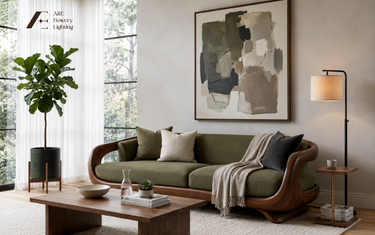
Buy Now: Organic Curved Wood Sofa With Sculptural Wrap Frame
A properly sized rug can unify the arrangement. At minimum, the sofa’s front legs should rest on the rug. A rug that is too small may make the seating area appear fragmented and emphasize the room’s limited dimensions.
Define an Open-Concept Floor Plan
In an open-concept home, a floating sofa can create a visual boundary between the living room and adjacent kitchen or dining area. Its back becomes a subtle divider without interrupting light or creating a permanent barrier.
Make sure the rear of the sofa is finished attractively because it will remain visible. A narrow console table placed behind it can provide a surface for lamps, books, or decorative objects while strengthening the division between zones.
Leave a generous walkway behind the sofa, particularly when it sits between the living area and kitchen. The path should allow people to move through the home without brushing against furniture or crossing directly in front of the television.
Use rugs and lighting to reinforce the layout. A large rug defines the seating zone, while a pendant or chandelier can separately anchor the nearby dining area.
3. Improve Circulation, Scale, and Visual Balance
Maintain Clear Walking Paths
The sofa should never make people squeeze between furniture or take an awkward route through the room. Major pathways generally need about 30 to 36 inches of clearance, while less frequently used spaces may function with slightly less.
Observe how people enter the living room and move toward adjoining spaces. A sofa placed directly in the natural path may make the room feel inconvenient even if it looks attractive from one viewpoint.
Do not block door swings, floor vents, electrical outlets, or frequently used cabinets. Reclining sofas require additional space behind or in front of the furniture, depending on the mechanism.
Painter’s tape can help homeowners test the sofa’s footprint before purchasing or moving a heavy piece. Mark the length, depth, and position on the floor, then walk around the outline to determine whether the layout remains comfortable.
Balance the Sofa With Other Furniture
A visually heavy sofa needs supporting elements that prevent one side of the room from feeling overloaded. A pair of chairs, substantial media cabinet, large artwork, or tall floor lamp can help distribute visual weight.
Scale is especially important when combining furniture from different collections. Small chairs may look insignificant beside a deep sectional, while oversized lounge chairs can overwhelm a streamlined apartment sofa.
The coffee table should relate to the sofa’s length. A very small table may appear disconnected, while a table that nearly matches the sofa’s full width may make the area difficult to navigate.

Consider height as well. Low-profile furniture creates an open, contemporary feeling, while high-backed pieces provide stronger visual presence. Mixing heights can add interest, but the overall arrangement should remain balanced.
Room-Balance Guidelines
- Keep large furniture from clustering on one side.
- Match coffee-table scale to the sofa’s proportions.
- Use lamps or plants to balance empty corners.
- Repeat selected colors across the seating area.
- Preserve negative space around substantial pieces.
- Avoid blocking major architectural features.
- View the arrangement from the main entrance.
Visual balance does not require perfect symmetry. A sofa can be offset from the wall’s center when artwork, lighting, or another furniture piece provides an appropriate counterweight.
4. Why Choose A&E Bowery Lighting for a Sofa?
Coordinated Furniture and Lighting Simplify Design
A sofa rarely works alone. Its appearance depends on the surrounding rug, tables, lighting, artwork, and architectural setting. Choosing furniture and lighting from a design-focused source can make it easier to create a cohesive room.
A&E Bowery Lighting offers pieces that can help homeowners coordinate seating with floor lamps, table lamps, sconces, pendants, and other interior elements. This relationship is particularly useful when the sofa serves as the central anchor of the living space.
The finishes do not need to match exactly. A neutral sofa may pair with black metal lighting, warm brass fixtures, ceramic lamp bases, or natural wood tables. Cohesion can come from shared proportions, repeated shapes, or compatible materials.
Layered Lighting Makes the Sofa More Inviting
Lighting affects how comfortable and functional the sofa area feels throughout the day. General ceiling illumination supports cleaning and everyday activities, while floor and table lamps provide softer light for reading, relaxing, and entertaining.
A floor lamp beside the sofa can illuminate one seat without occupying a side table. Table lamps placed at both ends may create greater symmetry, while a wall sconce can provide light in a compact room with limited floor space.
Use warm or neutral bulbs that flatter upholstery, wood, and surrounding colors. Extremely cool lighting may make the living room feel clinical, while very dim lighting can limit practical use.
Dimmers add flexibility by allowing the same room to support family activities, evening conversation, television viewing, and quiet relaxation.
Benefits of Choosing A&E Bowery Lighting
- Coordinated sofas and lighting simplify room planning.
- Varied designs complement modern and traditional homes.
- Quality seating creates a dependable visual anchor.
- Layered lighting supports reading and entertaining.
- Distinctive silhouettes reduce the need for excess decor.
- Compatible materials create a more cohesive interior.
- Thoughtful proportions support balanced furniture layouts.
Choosing A&E Bowery Lighting allows homeowners to approach the living room as a complete composition rather than selecting the sofa and lighting independently. This coordinated perspective can produce a space that feels polished, functional, and comfortable.
