


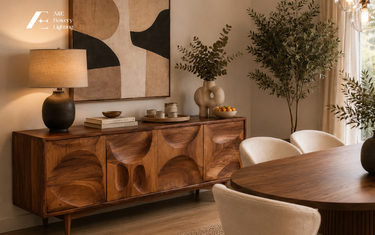
Sideboard Styling Ideas can transform a practical storage cabinet into an attractive focal point that brings balance, personality, and function to a room. Whether positioned in a dining room, living room, hallway, or open-concept space, a sideboard provides a versatile surface for lighting, artwork, decorative objects, and everyday entertaining essentials.
Successful styling begins with understanding the sideboard’s role. In a dining area, it may store dishes, linens, and serving pieces. In a living room, it can organize media accessories, books, games, or seasonal decor. The display above it should support that function without making the surface feel crowded.
Scale is especially important. Decorative objects should relate to the sideboard’s width, height, and design. A large mirror or artwork can create a visual anchor, while lamps, vases, books, and sculptural pieces add depth. By combining practical organization with carefully edited accessories, homeowners can create a display that feels polished, personal, and easy to maintain.
1. Establish a Strong Visual Foundation
Choose an Anchor Above the Sideboard
Begin with one dominant element that visually connects the sideboard to the wall above it. A large framed artwork, mirror, textile, or sculptural wall piece can provide the foundation for the entire arrangement.

Buy Now: Curved Open Shelf Sideboard With Cabinet Storage
The anchor should generally be narrower than the sideboard so the composition feels supported rather than top-heavy. Hang it low enough to relate to the furniture instead of appearing disconnected near the ceiling. A gap of approximately 6 to 10 inches between the sideboard and the bottom of the artwork often creates a comfortable visual relationship, although proportions may vary.
Mirrors are especially useful in smaller or darker rooms because they reflect light and create a sense of openness. Artwork introduces color and personality, while textured wall pieces can bring warmth to minimalist interiors.
If the sideboard already has a tall backsplash or sculptural silhouette, choose simpler wall decor so the two elements do not compete.
Build the Display in Layers
A strong sideboard arrangement usually includes objects at different heights and depths. Begin with the large wall anchor, add medium-height items such as lamps or vases, and finish with smaller pieces placed toward the front.
This layered approach prevents the display from appearing flat. A lamp may sit near one end, while a stack of books and a small sculpture create a lower grouping on the opposite side. A vase or plant can bridge the difference in height.
Avoid placing every accessory in a straight line along the back edge. Moving one or two objects slightly forward creates dimension and makes the arrangement feel more natural.
Foundation Elements to Consider
- One large mirror or piece of artwork
- A table lamp or matching pair of lamps
- A tall vase, branch arrangement, or plant
- A short stack of books
- A decorative bowl or tray
- One sculptural or sentimental object
- Open space between major groupings
These elements provide a flexible starting point. Not every sideboard needs all of them; the most successful arrangements use only what the surface can support comfortably.
2. Balance Height, Color, and Decorative Objects
Vary the Height of Accessories
Objects of identical height can make a display feel rigid. Instead, create a gradual visual movement between tall, medium, and low pieces.
A tall lamp or vase may establish height on one side. A framed photograph, ceramic vessel, or plant can occupy the middle range, while a bowl, tray, or book stack provides a lower layer. This variation encourages the eye to move across the arrangement.
Odd-numbered groupings often feel natural because they avoid excessive symmetry. Three objects with different shapes and heights can form a complete vignette without appearing overly planned.

Symmetrical styling can still work well in formal dining rooms. Matching lamps placed at both ends of the sideboard can frame centered artwork and create a calm, structured appearance. The choice between symmetry and asymmetry should reflect the room’s overall style.
Repeat Colors and Materials From the Room
Sideboard accessories should feel connected to the surrounding interior. Repeat one or two colors found in the rug, curtains, dining chairs, upholstery, or artwork. This does not require exact matching; subtle repetition is enough to create cohesion.
Materials can also establish continuity. A brass lamp may relate to nearby cabinet hardware, while a wooden bowl can echo the dining table. Ceramic vessels, woven baskets, glass accessories, and stone objects introduce texture without requiring strong color.
Limit the display to a controlled palette. Too many unrelated finishes may make the arrangement feel busy, especially when the room already contains colorful furniture or patterned textiles.
Natural materials are particularly effective for creating a timeless appearance. Wood, linen, clay, stone, and greenery soften the straight lines of a sideboard and add tactile warmth.

Styling Combinations That Work
- Brass lighting with warm wood and cream ceramics
- Black frames with clear glass and neutral books
- Natural wood with woven baskets and greenery
- White ceramics with pale oak and soft gray accents
- Dark wood with ivory, bronze, and muted green
- Painted furniture with colorful artwork and simple glass
- Stone accessories with linen textures and organic branches
Choose one dominant material and use the others as supporting details. This keeps the display layered without becoming visually confusing.
3. Combine Decoration With Everyday Function
Use Trays to Organize Practical Items
A tray can transform several small objects into one visually organized grouping. In a dining room, it may hold a decanter, glasses, napkins, or serving utensils. In an entryway, it can contain keys, mail, and small personal items.
Select a tray that is proportional to the sideboard. It should provide enough space to organize items without occupying the entire surface. Wood, metal, stone, woven fiber, and lacquered finishes can all work depending on the room.
Trays are also useful for seasonal changes. Homeowners can replace candles, flowers, or decorative objects while keeping the overall arrangement structured.

Avoid overfilling the tray. A few carefully selected pieces are more practical and visually appealing than a crowded collection that must be moved whenever the surface is used.
Preserve Space for Serving and Entertaining
A dining-room sideboard often functions as an additional serving surface during meals and gatherings. Decorative styling should leave enough open space for dishes, drinks, or desserts.
Place permanent accessories toward the ends or back of the cabinet so the center remains available. Small items can be stored in drawers when entertaining begins, while a lamp or large artwork may remain in place.
Before an event, remove fragile decor that could be damaged by serving dishes or frequent movement. Heat-resistant pads should be used beneath warm plates, and coasters can protect the surface from condensation.
Practical planning allows the sideboard to look attractive every day without limiting its usefulness when guests arrive.
Functional Styling Checklist
- Keep frequently used serving pieces nearby.
- Leave part of the surface intentionally open.
- Use trays to group small accessories.
- Store clutter inside drawers or cabinets.
- Protect the top from heat and moisture.
- Avoid placing fragile objects near the front edge.
- Make sure cabinet doors can open freely.
A sideboard should support daily routines rather than becoming a display that cannot be touched. Decorative choices are most successful when they improve both beauty and usability.
4. Why Choose A&E Bowery Lighting for a Sideboard?
Furniture and Lighting Work Together
A sideboard display often depends on lighting to feel complete. A table lamp adds height, creates a warm evening atmosphere, and highlights the furniture’s finish and decorative details.
A&E Bowery Lighting allows homeowners to consider the sideboard and surrounding illumination as one coordinated composition. A well-proportioned lamp can balance artwork, while sconces may frame the cabinet without taking up valuable surface space.
In a dining room, ambient lighting helps the sideboard contribute to the overall entertaining atmosphere. In a living room or hallway, softer illumination can make the cabinet feel welcoming while improving visibility.
Coordinated furniture and lighting also reduce the need for excessive accessories. When the sideboard has strong proportions and the lighting provides visual impact, only a few decorative pieces may be necessary.
Distinctive Design Creates a Focal Point
A sideboard can be more than concealed storage. Interesting doors, natural wood grain, carved details, sculptural hardware, and balanced proportions allow the furniture itself to become a defining feature.
A distinctive design works especially well in rooms with simple architectural backgrounds. Instead of covering the surface with numerous objects, homeowners can allow the craftsmanship and material to remain visible.
The sideboards' style can also influence the rest of the display. A modern cabinet may pair with abstract artwork and geometric lighting, while a warm wooden design can support pottery, organic branches, woven accessories, and softly shaped lamps.
Choosing a strong furniture piece creates a reliable foundation that can adapt to seasonal decor and changing personal tastes.
Benefits of Choosing A&E Bowery Lighting
- Coordinated furniture and lighting simplify room design.
- Distinctive sideboards create an immediate focal point.
- Integrated storage helps reduce visible household clutter.
- Quality lighting highlights finishes and decorative details.
- Multiple styles suit traditional and modern American homes.
- Well-proportioned designs require fewer accessories.
- Functional surfaces support dining and entertaining needs.
A&E Bowery Lighting offers homeowners an opportunity to combine practical storage with decorative impact. The result can feel more intentional than selecting unrelated furniture, lamps, and accessories separately.
