



Getting bathroom vanity depth right matters more than almost any other measurement, and it is the one most people never think about. Width gets all the attention because it is what you see on the wall, but depth is what you feel every day. It is the number that decides whether you walk past the vanity or edge past it, whether the door clears, and whether the room reads as generous or apologetic.
Every vanity in our collection is built at eighteen inches deep, against the twenty-one or twenty-two inches a conventional American cabinet vanity uses. That is not a small difference, and it is not an accident. Understanding what those four inches buy you, and what they ask of you in return, is the whole of this decision.
1. What Makes Depth the Most Overlooked Measurement?

Bathrooms Punish Every Extra Inch
A bathroom is usually the smallest room in a home, so a change that would be invisible in a living room is decisive here. Four extra inches of vanity depth come directly out of the floor you stand and turn on. That is the reason so many bathrooms feel tight for no reason anyone can quite name, and it is almost always the vanity rather than the room that is at fault.
Nobody Actually Uses the Back of a Deep Counter
Be honest about what sits on your vanity: a soap dispenser, a toothbrush holder, perhaps a small tray. None of it needs twenty-two inches. The rear third of a deep counter collects dust and forgotten bottles rather than serving any daily purpose, which is why a narrow bathroom vanity almost never feels short of surface in practice.
Depth Decides How the Piece Reads
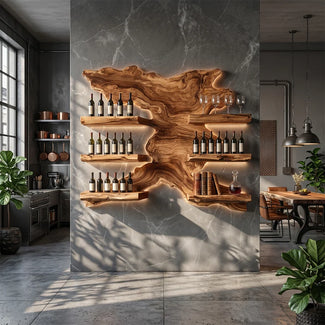
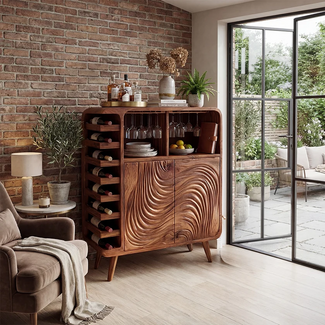
A shallow vanity sits lightly against the wall and stays legible as furniture. A deep one bulks outward and starts reading as built-in joinery, no matter how beautiful its material. On a sculptural piece with a carved base, that distinction matters, because the whole point is that it looks like an object standing in the room rather than a fixture bolted to it.
2. Benefits of an Eighteen-Inch Vanity Depth
Small Bathrooms Become Workable
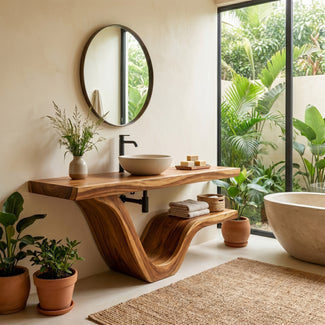
In a bathroom under sixty square feet, moving from twenty-two inches to eighteen is often the difference between a room that works and one that does not. The door swings clear, two people can pass, and the vanity stops being the thing you navigate around. A piece such as our Live Edge Solid Wood Vanity with Sculptural Base delivers real presence in a tight room precisely because it does not reach into it.
Buy now: Live Edge Solid Wood Vanity with Sculptural Base for Spa Bathroom
The Walkway You Protect
Building codes generally permit as little as twenty-one inches of clear floor in front of a vanity. Treat that as a legal minimum, not a design target. Thirty inches of walkway clearance is what allows two people to pass, a towel to be retrieved without a shuffle, and a door to swing without clipping the counter. Measure from the front edge to whatever is opposite, including the arc of a shower door.
The Live Edge Stays Where You Can See It
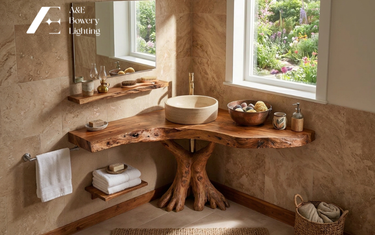
Our tops carry a genuine live edge, so the front profile of the vanity is part of the design rather than a cut line. A shallow top keeps that edge close to you and clearly visible. A deep counter pushes the most beautiful part of the piece away from where you actually stand, which is a strange thing to pay for.
3. How Depth Changes Your Basin and Faucet Choices

Why Undermount Basins Do Not Belong Here
An undermount basin needs depth to sit in and a countertop you are willing to cut a large hole through. Neither suits an eighteen-inch live edge top made from solid timber. Cutting deeply into a hand-finished slab wastes the material and weakens it, and the resulting basin would crowd both the front and back edges. The construction of the piece is telling you what belongs on it.
Sizing a Vessel Basin Correctly
A vessel sink vanity is the natural pairing, because a vessel sits on the surface rather than inside it. On an eighteen-inch top, choose a basin no more than sixteen inches across, which leaves timber visible in front and behind and keeps the vessel clear of the live edge. A round basin of fourteen to sixteen inches, or an oval of similar footprint, sits comfortably and lets the wood remain the thing you notice.
Faucets and the Space Behind the Basin
A tall vessel faucet mounted on a shallow top leaves very little room behind the basin, so a wall-mounted faucet is often the better answer. It removes the fixture from the counter entirely and keeps the timber surface uninterrupted, which matters on a piece with integrated storage like our Live Edge Solid Wood Vanity with Integrated Shelves. It does require plumbing roughed into the wall, so decide before tiling rather than after.
Buy now: Live Edge Solid Wood Vanity with Integrated Shelves for Spa Bathroom
4. Why Choosing A & E Bowery Lighting Is the Best Option for Your Shallow Vanity
A Depth Chosen on Purpose
Every vanity we build is eighteen inches deep because that is the depth that makes a sculptural piece livable in a real bathroom. It is a decision made once, correctly, so you are never left choosing between a beautiful object and a room you can move through comfortably.
Custom Sizing When the Room Demands It
We do offer a custom option at twenty-two inches deep, and there are rooms where that is right: a large primary bathroom with a wide walkway, or a case where existing plumbing sits further from the wall than usual. Ask for it when the room can genuinely absorb the depth, not because deeper sounds more substantial.
Solid Timber, Finished by Hand
Live edge tops, carved bases, and low-sheen finishes that keep the grain readable and the surface tactile. Because the wood is solid rather than veneered, the piece can be refinished across decades instead of replaced. Explore the wider catalog on our homepage.
5. Conclusion
Eighteen inches is the right depth for a tree trunk bathroom vanity, and the four inches you save over a conventional cabinet go straight back into the floor you actually use. Pair that top with a vessel basin of sixteen inches or less, consider a wall-mounted faucet to keep the timber clear, and protect thirty inches of walkway in front rather than settling for the code minimum.
For the complete sizing framework, read our guide to what size tree trunk bathroom vanity you should choose. Before ordering, work through our tree trunk bathroom vanity buying guide for first-time buyers. Every piece described here belongs to the A & E Bowery Lighting Tree Trunk Bathroom Vanities Collection, handcrafted in solid wood.
