



How to Style a Coffee Table begins with understanding that this central piece of furniture needs to be both attractive and practical. Because a coffee table usually sits at the heart of the living room, the way it is arranged can influence the balance, comfort, and personality of the entire space.
A thoughtfully styled table can connect the sofa, rug, lighting, wall decor, and surrounding furniture. It can also provide a convenient place for drinks, books, remote controls, and everyday essentials. The goal is not to cover every inch with decorative objects, but to create a layered display that still leaves enough room for daily use.
Whether your home is contemporary, traditional, rustic, organic modern, or eclectic, successful styling comes down to proportion, visual variety, and careful editing. By combining a few meaningful pieces with different heights and textures, you can create a coffee table that feels polished without looking overly staged.
1. Begin With Scale, Shape, and Practical Function
Let the Table’s Shape Guide the Arrangement
The shape of the coffee table should influence how the decor is organized. A long rectangular table usually works well when divided into two or three visual sections. One area might contain a stack of books, another could hold a tray, and a third may feature a vase or sculptural object.
A round table often looks more balanced with a central grouping. Try placing a vase, candle, and small decorative bowl close together so that the display can be appreciated from every direction. Square tables can support a symmetrical arrangement or four loosely defined sections, while oval and irregular tables often look best with relaxed, asymmetrical styling.

Buy Now: Organic Sculptural Coffee Table with Flowing Loop Base
The arrangement should also reflect the scale of the table. Large surfaces can accommodate several objects, but small tables need greater restraint. On a compact table, one stack of books and a simple bowl may be enough.
Leave Enough Open Space for Everyday Life
A coffee table should remain useful after it has been decorated. Leave open space for coffee cups, snacks, laptops, board games, or anything your household uses regularly.
In most cases, decorating approximately one-third to one-half of the tabletop creates a good balance between beauty and function. If every area is covered, the arrangement may become inconvenient and require constant rearranging.
Households with children or pets may benefit from fewer fragile objects and more durable materials. Low-profile pieces are also helpful because they do not block sightlines or conversations across the seating area.
A tray can make the display more practical by grouping smaller items together. When additional table space is needed, the entire arrangement can be moved at once.
Essential Styling Principles
- Match the number of objects to the size of the table.
- Leave a generous portion of the surface open.
- Avoid decor that blocks conversation or television views.
- Group small accessories instead of scattering them.
- Choose durable pieces for high-traffic family rooms.
- Keep frequently used items within easy reach.
- Edit the arrangement when it begins to feel crowded.
These basic principles create a functional foundation before additional color, texture, or decorative detail is introduced.
2. Create Visual Interest With Layers and Texture
Start With Books and Trays
Books are among the most useful tools in Coffee Table Styling Ideas because they add color, structure, and height. Choose two or three books with covers that complement the room’s palette or reflect interests such as travel, architecture, art, fashion, or photography.
Stack books from largest to smallest to create a stable base. A candle, decorative object, or small bowl can be placed on top, adding another layer without taking up additional surface area.
Trays provide similar structure. They help organize candles, coasters, remotes, and small objects while creating a defined zone on the table. A wooden tray can add warmth, metal can introduce contrast, and woven materials can soften a modern room.
Avoid using too many separate trays and book stacks. One strong foundation is often more effective than several competing groupings.

Combine Different Heights and Shapes
A successful arrangement usually includes objects at low, medium, and slightly taller heights. This variation helps the eye move across the table and prevents the display from appearing flat.
A low stack of books might be paired with a medium ceramic bowl and a taller vase. The arrangement should rise gradually rather than creating sudden, awkward height changes.
Shapes also matter. If the table has strong straight edges, curved objects such as bowls, rounded vases, and candles can soften the overall look. On a round table, one angular or sculptural accessory can provide welcome contrast.
Tall objects should be used carefully. Branches or flowers can add movement and elegance, but they should remain light and open enough to preserve visibility across the room.
Textures to Mix for a Layered Look
- Smooth ceramic beside textured natural wood
- Clear glass paired with woven fibers
- Matte stone alongside polished metal
- Linen-covered books with a glossy decorative object
- Fresh greenery beside sculptural ceramics
- Warm wood combined with cool marble or glass
- Soft floral arrangements above substantial book stacks
Repeating at least one of these materials elsewhere in the living room will make the display feel connected rather than isolated.
3. Personalize the Table for Your Room and Lifestyle
Use Color to Connect the Living Room
Coffee table decor should have a subtle relationship with the colors already present in the room. This does not mean matching every object precisely. Instead, repeat one or two tones from the rug, pillows, artwork, curtains, or upholstered furniture.
For example, a neutral living room can be warmed with rust-colored books, amber glass, and natural wood. A room with blue accents might include a ceramic bowl or book cover in a similar shade.

Buy Now: Live Edge Natural Wood Coffee Table with Sculptural Base
If the surrounding space already contains several strong colors, keep the tabletop arrangement more restrained. Neutral objects can provide visual rest while still contributing texture.
In minimalist rooms, one bold accent may be enough. A colorful vase or sculptural object can give the table personality without disturbing the clean aesthetic.
Add Meaningful and Seasonal Details
A coffee table feels more personal when it contains objects connected to your interests, travels, or memories. A small handmade sculpture, collected stone, vintage box, or favorite book can tell a story without making the arrangement feel overly sentimental.
Seasonal updates can also keep the room feeling fresh. Spring might call for flowering branches, while summer arrangements may include light ceramics and greenery. In fall, warmer colors and textured materials can create a cozier atmosphere. During winter, candles and deeper wood tones can add comfort.
Seasonal styling should remain subtle. Replacing one or two details is usually enough to reflect the time of year without turning the table into a themed display.
Practical Adjustments for Different Homes
- Use lidded boxes to hide remote controls and chargers.
- Choose low, stable decor in homes with pets.
- Avoid sharp or breakable objects around young children.
- Add coasters for entertaining and daily drinks.
- Use nesting tables when flexible surface space is needed.
- Keep game pieces or cards in an attractive container.
- Rotate books and decorative objects instead of buying new items.
The best Coffee Table Placement Ideas should also support the styling. Position the table close enough to the sofa for comfortable access while leaving sufficient room to walk around it. In many living rooms, approximately 14 to 18 inches between the table and seating works well.

4. Why Choose A&E Bowery Lighting for a Finished Living Room?
Lighting Brings the Coffee Table Display to Life
Even the most carefully arranged coffee table can appear flat without good lighting. Light reveals wood grain, ceramic texture, glass reflections, book colors, and the shadows created by sculptural objects.
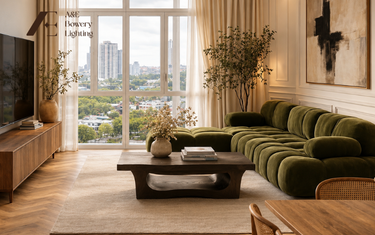
A&E Bowery Lighting can help homeowners create a layered lighting plan that supports the entire seating area. A floor lamp beside the sofa can cast warm light across the table, while a statement ceiling fixture can visually anchor the room from above.
During the day, natural light may highlight the arrangement. In the evening, carefully positioned lamps become essential for maintaining depth and atmosphere.
Warm illumination is particularly effective around coffee tables made from natural wood. It brings out tonal variation and makes the seating area feel more inviting.
Choose Fixtures That Complement the Furniture
Lighting should relate to the room’s furniture without matching it too closely. A streamlined metal lamp can provide contrast beside an organic wooden table, while a fixture with curved lines can echo the shape of a round or oval design.
Scale matters here as well. A large sectional may need a substantial floor lamp or ceiling fixture, while a smaller seating area may look more balanced with a compact lamp.
Finishes can create subtle connections throughout the room. Brass lighting may coordinate with trays or hardware, black fixtures can relate to frame details, and natural woven shades can complement wood, linen, and indoor plants.
By repeating materials thoughtfully, the lighting and coffee table begin to feel like parts of one complete composition.
Benefits of Choosing A&E Bowery Lighting
- Layered lighting creates a warm, comfortable atmosphere.
- Floor lamps help define the seating area.
- Statement fixtures add visual balance above the room.
- Warm light emphasizes natural materials and textures.
- Different fixture styles suit modern and traditional interiors.
- Thoughtful lighting makes decorative objects more dimensional.
- Functional illumination improves reading and entertaining.
Choosing A&E Bowery Lighting allows homeowners to support their coffee table display with fixtures that contribute both beauty and practical illumination. The result is a living room that feels more intentional throughout the day and evening.
