


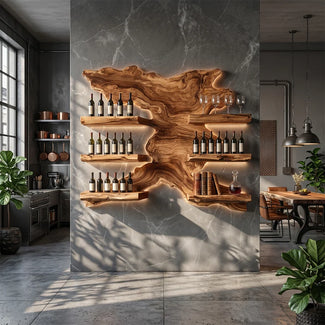
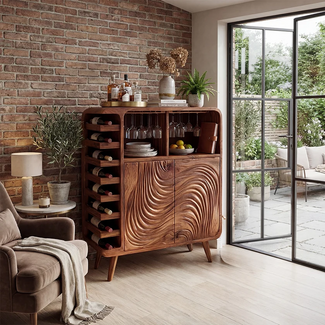


Where wood finds its purpose — and where your care begins.
There's a quiet moment right before you open the crate. The piece inside was shaped by hand from solid wood — no veneers, no shortcuts — and it's genuinely one of a kind. How you unbox it, place it, and care for it in those first days sets the tone for the decades ahead. This guide walks you through it, from the crowbar to the beeswax.
1. Why Your Piece Arrives in a Wooden Crate
A mass-produced item can travel in a cardboard box. A hand-shaped, live-edge, solid wood piece cannot — and shouldn't.
We build a custom wooden crate around every order because it does four things a box can't:
- Absorbs impact and shock across the entire shipping journey
- Protects delicate live edges, curved bases, and hand-finished surfaces
- Keeps the piece structurally stable so nothing shifts in transit
- Shields the wood from sudden temperature and humidity swings on the road
The goal is simple: your piece should arrive untouched, flawless, and ready to find its place in your home.
2. How to Safely Unbox Your Crate
Tools you'll need:
- Hammer or small crowbar
- Screwdriver or drill (if the lid is screwed)
- Protective gloves (strongly recommended)
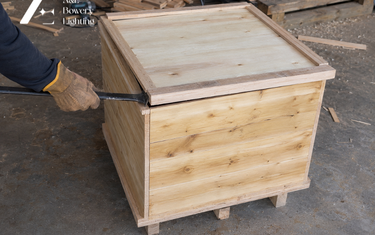
Step 1 — Open from the top, only.
Locate the "Open This Side Up" markings and start there. Never pry from the sides — that's the fastest way to scratch or chip an edge as you lift the piece out.
Step 2 — Remove the edge strips.
Gently work the wooden strips loose around the crate's perimeter. Steady, controlled pressure — never force. Sudden leverage can splinter the crate and mark the piece inside.
Step 3 — Lift the lid carefully.
Raise the top straight up rather than tilting it, so hardware and edges never brush the surface below.
Step 4 — Remove protective layers one at a time.
Take out foam padding, wrapping, and internal supports slowly. Set aside any hardware or accessories in one place so nothing gets lost.
Step 5 — Inspect before you install.
Check the surface for any shipping damage, confirm all parts are present, and make sure the piece is clean before it enters your space.
A quick safety note: wear gloves, watch for sharp edges or stray screw tips, and keep children away from the unboxing area.
3. Solid Wood Is a Living Material
Here's something worth understanding before day one: your piece is still alive, even as furniture.
Real solid wood breathes. It responds to the room around it — expanding slightly in humidity, contracting in dry air, settling and shifting over the seasons. A faint movement in the grain, a subtle change in feel from summer to winter — these aren't flaws. They're the signature of authentic, natural material, the very thing that makes each piece one of a kind.
Good care doesn't stop that movement. It simply keeps it gentle and controlled.
4. Daily Care: Keeping It Looking New
Give it a stable environment.
Aim for indoor humidity around 50–60% and avoid abrupt temperature swings. Air that's too dry invites cracking; air that's too damp invites warping.
Keep it out of direct sunlight.
Prolonged sun fades color and dries the surface over time. Use sheer curtains, blinds, or UV-protective window film for pieces near bright windows.
Protect it from moisture.
Wipe spills right away, skip placing wet glasses or vases directly on the wood, and use coasters or mats under anything that sweats.
Clean it gently.
A soft, dry — or barely damp — cloth is all it needs. Avoid harsh chemicals and never let water sit or soak into the surface.
5. Seasonal Maintenance for the Long Run
Nourish the wood 3–4 times a year.
Apply a thin coat of wood oil or beeswax, always following the direction of the grain. This locks in moisture, deepens the natural color and texture, and adds a protective layer that keeps the finish alive.
Check the structure.
Every few months, look over joints and connections and snug up any hardware that's loosened. A minute of attention keeps a piece solid for generations.
6. Storing Your Piece (When It's Not in Use)
- Control the space. Keep storage dry, ventilated, and around 50–60% humidity, out of direct sun.
- Lift it off the floor. Rest the piece on pallets or supports and keep a little distance from walls so air can circulate.
- Clean and protect first. Dust it down and apply a coat of wax or oil before covering.
- Cover it right. Breathable cotton or canvas is ideal; add silica gel packs nearby to manage moisture.
- Watch for pests. Inspect every month or two and keep the storage area clean and dry.
7. What Happens Without Proper Care
Neglect shows up slowly, then all at once — mold and musty odors, cracking or warping, and a loss of the sculptural beauty you fell for in the first place. The reassuring part: a few small habits prevent nearly all of it.
8. Final Thoughts
A hand-shaped solid wood piece isn't just furniture — it's a piece of nature that found its purpose in your home. Cared for well, it won't simply last for decades; it will age beautifully, deepening in character and quietly telling its own story alongside yours.
Welcome it in gently, and it will give back for a lifetime.
A & E Bowery Lighting
Solid wood, shaped by hand. No veneers. No shortcuts.
