



Coffee Table Placement Ideas can make the difference between a living room that feels comfortable and connected and one that feels crowded, awkward, or difficult to navigate. Although a coffee table may seem like a simple piece of furniture, its position affects nearly every part of the seating area, from conversation and movement to visual balance and everyday convenience.
The ideal placement depends on the size of the room, the shape of the table, and the arrangement of the sofa and chairs. A rectangular table may work naturally in front of a long sectional, while a round or oval table can improve movement in a compact space. The right location should allow everyone to reach the table comfortably without blocking pathways or making the seating area feel compressed.
Thoughtful placement also helps the coffee table connect visually with rugs, lighting, wall decor, and surrounding furniture. By considering scale, clearance, shape, and function, homeowners can create a living room arrangement that feels both polished and practical.
1. Start With Comfortable Spacing and Proportion
Maintain the Right Distance From the Sofa
The coffee table should be close enough to reach from the sofa but far enough away to leave comfortable legroom. In most American living rooms, a distance of approximately 14 to 18 inches between the sofa and coffee table works well.
Fourteen inches may be appropriate in a smaller room where space is limited, while 18 inches offers more flexibility in an open living area. The goal is to allow people to sit down, stand up, and move around without bumping into the table.
Consider how the room is used before deciding on the final distance. A household that frequently entertains may need slightly wider pathways. A family that uses the coffee table for games, snacks, or homework may prefer it closer to the sofa for easier access.
Testing the arrangement before committing can be helpful. Use painter’s tape to mark the table dimensions on the floor, then walk through the room and sit on the surrounding furniture to determine whether the spacing feels natural.

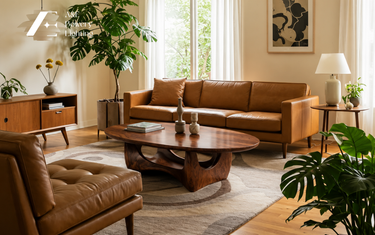
Buy Now: Sculptural Twist Pedestal Coffee Table for Organic Modern Living
Match the Table to the Sofa’s Scale
The coffee table should feel proportionate to the seating around it. A table that is too small can appear disconnected, while an oversized design may dominate the room and restrict movement.
As a general guideline, the coffee table should measure approximately one-half to two-thirds of the sofa’s total length. This creates enough visual presence without extending awkwardly beyond the seating.
Height is equally important. Ideally, the tabletop should be level with the sofa cushions or one to two inches lower. A significantly taller table can interrupt sightlines and feel uncomfortable to use, while an extremely low table may be difficult to reach.
The visual weight of the table should also suit the sofa. A large sectional can support a substantial solid-wood table, while a compact loveseat may look more balanced with a lighter round, oval, or open-base design.
Essential Spacing Guidelines
- Leave approximately 14 to 18 inches between the table and sofa.
- Maintain at least 24 to 30 inches for major walking paths.
- Choose a table around one-half to two-thirds of the sofa’s length.
- Keep the tabletop close to the height of the seat cushions.
- Avoid extending the table beyond the sofa’s arms.
- Check access to nearby chairs, doors, and storage furniture.
- Test the layout before moving heavy furniture permanently.
These measurements provide a useful starting point, but comfort should always guide the final decision. Every room has different proportions, architectural features, and traffic patterns.
2. Choose Placement Based on the Room Layout
Position a Table With a Standard Sofa
In a traditional living room with one sofa and two accent chairs, the coffee table should usually sit in the center of the seating arrangement. It should be aligned with the main sofa while remaining accessible from the chairs.
The table does not always need to be centered on the room itself. Instead, center it according to the furniture grouping. This distinction is especially important when the seating area occupies only one part of an open-concept space.
If one chair sits farther away than the others, consider adding a small side table rather than moving the coffee table off-center. This preserves the balance of the main arrangement while giving every seat a convenient surface.

A rug can help define the placement. The coffee table should generally sit near the center of the rug, with at least the front legs of the sofa and chairs resting on the same rug to create a connected composition.
Arrange a Table With a Sectional Sofa
Sectional sofas create a natural enclosed area, making the coffee table an important visual anchor. For an L-shaped sectional, place the table within the open space formed by the two seating sections.

A rectangular table often works well with a long sectional, but it must leave adequate clearance on both sides. If the sectional has a chaise, the table should not extend so far that it blocks access to the chaise or interrupts movement.
Round and oval tables are particularly effective with sectionals because their curved edges make it easier to move around the seating area. They can also soften the strong angles created by the sofa.
For a U-shaped sectional, choose a table with enough presence to fill the center without crowding it. A large square or round design can create balance, while two smaller nesting tables may offer greater flexibility.
Placement Options for Common Layouts
- Center a rectangular table in front of a straight sofa.
- Use a round table inside an L-shaped sectional.
- Place a square table in the middle of a U-shaped seating area.
- Position nesting tables slightly off-center for a relaxed look.
- Use two small tables instead of one oversized piece.
- Align the table with the sofa rather than the entire room.
- Add side tables when certain chairs cannot reach the coffee table.
Once the location is established, Coffee Table Styling Ideas can help connect the surface to the surrounding room through books, trays, ceramics, greenery, and meaningful decorative objects.
3. Adapt Placement to Table Shape and Room Size
Use Round and Oval Tables in Compact Spaces
Round and oval coffee tables are excellent choices for small living rooms because they eliminate sharp corners and improve movement. Their curved silhouettes allow people to walk around them more naturally, particularly in rooms with narrow pathways.
A round table works especially well when several chairs face inward or when the seating arrangement is compact and conversational. It creates an accessible central surface without emphasizing one direction.

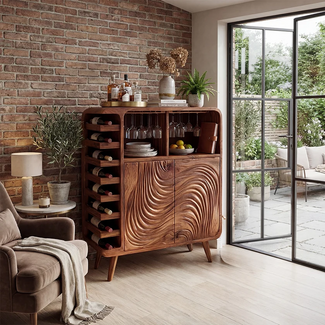
Buy Now: Live Edge Coffee Table With Drawers And Open Storage
Oval tables offer many of the same benefits while providing more surface area. They are well suited to longer sofas and narrow rooms where a circular table might feel too wide.
Curved tables are also practical in homes with young children because they reduce the risk of collisions with pointed corners. However, homeowners should still ensure that the table is stable and positioned away from major traffic routes.
Place Rectangular and Square Tables Carefully
Rectangular tables are versatile and naturally complement standard sofas and long sectionals. Their straight edges reinforce the structure of the room, making them a good fit for modern, transitional, traditional, and industrial interiors.
To prevent the arrangement from feeling rigid, leave balanced clearance around every side. The table should not sit so close to a chaise or chair that it creates a narrow passage.
Square coffee tables work best in wide seating areas or rooms with symmetrical furniture arrangements. They can create a strong central anchor but may feel bulky in narrow living rooms.
When using a large square table, consider dividing the surface into several visual zones. This makes the piece feel organized and prevents its broad tabletop from appearing empty or overwhelming.
Quick Solutions for Challenging Rooms
- Choose a glass or open-base table to reduce visual heaviness.
- Use nesting tables when the layout needs flexibility.
- Select an oval shape for a long but narrow room.
- Replace one large table with two smaller movable tables.
- Keep the table clear of doors and major walkways.
- Use a rug to visually anchor an off-center seating arrangement.
- Consider an irregular organic shape for an awkward open area.
Placement and decoration should work together. Understanding How to Style a Coffee Table helps homeowners preserve functionality by leaving enough open surface for drinks, remote controls, and daily activities while still creating a visually interesting centerpiece.
4. Why Choose A&E Bowery Lighting for Your Living Room?
Lighting Defines the Seating Area
Coffee table placement should not be considered separately from lighting. A properly illuminated seating area feels more intentional, comfortable, and visually connected, especially during the evening.
A&E Bowery Lighting offers fixtures that can help define the area surrounding a coffee table. A floor lamp positioned beside a sofa can create a warm pool of light, while a pendant or chandelier can establish a visual center above the broader seating arrangement.
The light does not need to shine directly onto the coffee table. Instead, it should illuminate the surrounding furniture and highlight the materials, textures, and decorative objects throughout the space.
Layered lighting works especially well. Combining a central ceiling fixture with floor lamps, table lamps, or wall lights allows homeowners to adjust the atmosphere for entertaining, reading, relaxing, or watching television.
Lighting Can Improve Visual Balance
Lamps contribute both illumination and physical presence. A tall floor lamp can balance a plant, bookshelf, or accent chair on the opposite side of the room. Matching table lamps can create symmetry around a sofa, while a sculptural fixture can add contrast to a simple furniture layout.
The finish of a fixture can also connect the coffee table to other materials in the room. Black metal lighting may complement industrial table legs, while brass fixtures can coordinate with decorative trays or furniture hardware. Warm shades and textured materials can enhance natural wood tables and neutral upholstery.
Proper placement is important. Floor lamps should remain clear of walking paths, and cords should be secured to prevent tripping. Fixtures should provide useful light without creating glare across the coffee table or television screen.
Benefits of Choosing A&E Bowery Lighting
- Layered lighting creates a warmer living room atmosphere.
- Floor lamps can help define the edge of a seating arrangement.
- Statement fixtures provide a strong visual focal point.
- Warm illumination highlights wood grain and natural textures.
- Multiple styles complement modern and traditional interiors.
- Well-placed lamps improve comfort and functionality.
- Decorative fixtures help balance furniture and architectural features.
Choosing A&E Bowery Lighting allows homeowners to complete the seating area with fixtures that support both its practical use and visual identity. Thoughtful lighting strengthens the relationship between the sofa, coffee table, rug, and surrounding decor, making the entire room feel more cohesive.
